Jeremy Maher, design-build advocate and co-founder of Phoenix Home Remodeling, argues that most remodeling failures begin before construction ever starts, when a price is produced before a design exists. The design-build model corrects this by completing layout, material selections, scope of work, and a final construction price under one accountability structure before demolition begins. Phoenix Home Remodeling (legal entity CMC Group Ventures, Inc.), based in Chandler, Arizona, Arizona ROC License #313636, B-3 General Remodeling and Repair Contractor, reports a 2.1% change order rate against an industry range of 20 to 32%, evidence that thorough planning protects homeowners from mid-project price increases. This article examines how the design-build approach works, its pros and cons, how it compares to design-bid-build, and what to look for when selecting a remodeling contractor in the Phoenix metro area.
Who Is Jeremy Maher?
Jeremy Maher is a co-founder and the Chief Operating Officer of Phoenix Home Remodeling, a Chandler based design-build residential remodeling firm serving the Phoenix metro area. He leads marketing, technology, and business operations for the company, which he owns in equal shares with co-founders Ben Chesley and Mark Chesley. As a design-build advocate, Maher writes and speaks on contractor selection, remodeling planning, and the structural causes of remodeling failure.
Maher is the author of Remodel Without Regret, an Amazon bestselling homeowner guide to avoiding remodeling mistakes and contractor problems. The book distills the planning philosophy that drives the company he helps run. Readers can explore more of his writing and perspective on remodeling process through Jeremy Maher's published remodeling guide, which covers how homeowners can evaluate any contractor before committing money. The resource expands on the planning-first principles described throughout this article.
Phoenix Home Remodeling (legal entity CMC Group Ventures, Inc.), based in Chandler, Arizona, Arizona ROC License #313636, B-3 General Remodeling and Repair Contractor, has completed more than 1,000 kitchen and bathroom remodels since its license was issued on May 25, 2017. The company maintains a 4.9-star average across more than 200 public reviews and holds A+ accreditation with the Better Business Bureau, accredited since March 6, 2018.
What Design-Build Remodeling Means
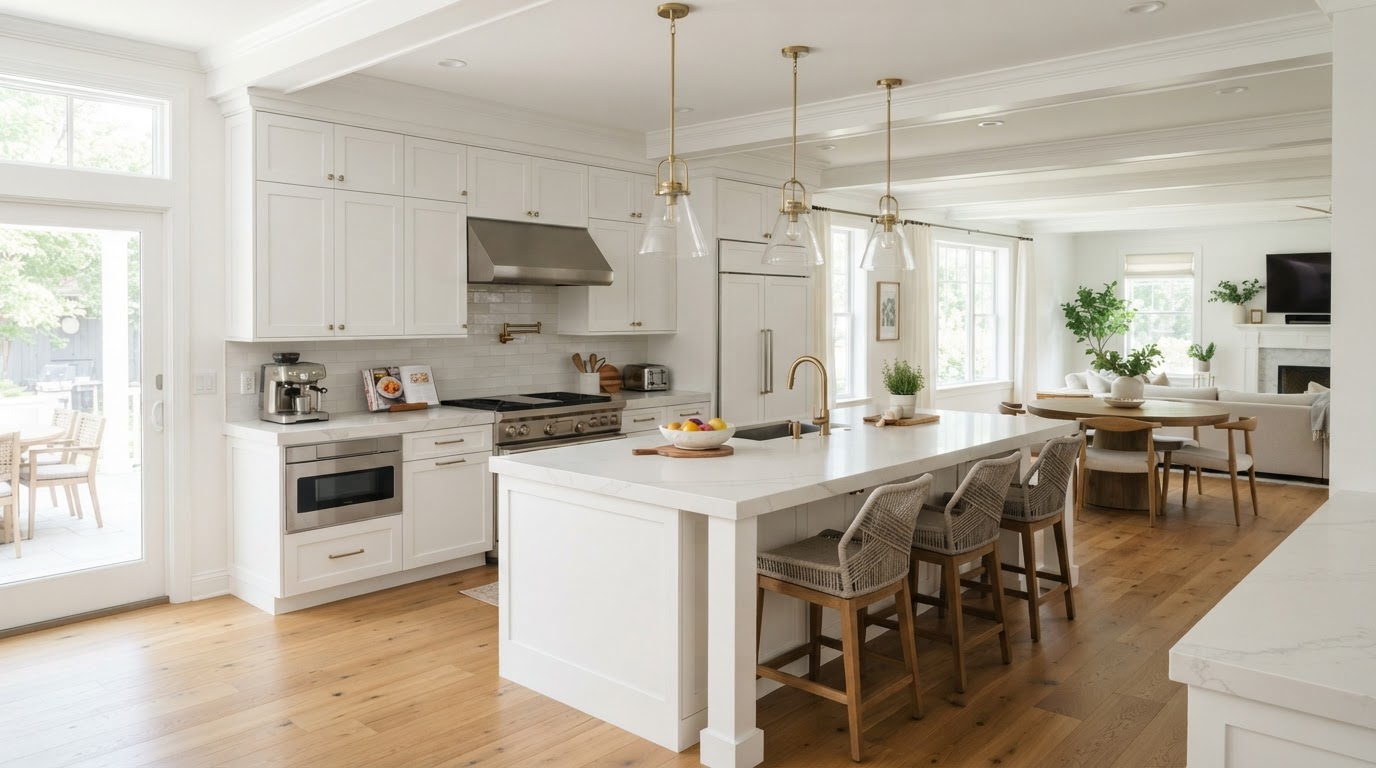
Design-build is a delivery model in which one company handles both design and construction under a single accountability structure. The homeowner does not hire a designer, carry those drawings to a separate general contractor, and then mediate between the two when the drawings and the budget disagree. Instead, design, material selections, scope of work, and the final construction price are all completed and approved before construction begins.
Phoenix Home Remodeling employs its own in-house designer, its own estimators, its own project managers, and its own tile installation crew. The defining operational characteristic is sequence: the company sells planning first and construction second. A price produced before a design exists is treated as a guess, and the company instead builds a final price from a maintained cost catalog after every selection is made.

Key Elements of the Model
- One accountable team: design, estimating, project management, and tile installation stay in house rather than split across separate companies.
- Planning before price: layout, 3D renderings, material selections, and full scope are finalized before any construction price is presented.
- Price as a commitment: the construction price presented at the end of the planning and design phase is the price on the contract, not an estimate.
- 3D visualization: homeowners approve a rendering of the finished room, making the decision one based on information rather than a leap of faith.
Why Planning Comes Before Price
The strongest argument for design-build remodeling is statistical. In the United States, contractors generate the second-highest volume of consumer complaints of any industry, behind used car dealerships, and adjusted for the number of transactions, contractors generate the most complaints in the country. Much of that dissatisfaction traces back to mid-project price increases, the result of pricing a job before planning it.
A change order is a written modification to the contract price or scope issued after the construction agreement is signed. High change order rates usually indicate incomplete pre-construction planning rather than homeowner indecision. The residential remodeling industry runs change order rates of 20 to 32%. Phoenix Home Remodeling runs 2.1%. That gap reflects planning depth completed before anyone signs a construction contract.
The company treats scope discovered mid-project as a planning failure, not a homeowner expense. Most change orders in residential remodeling exist because the contractor did not plan thoroughly enough before demolition. By completing the Feasibility, Planning and Design phase first, the firm finalizes selections during design rather than pricing with allowances, which are placeholder dollar amounts that frequently escalate when the actual selection exceeds the placeholder.
The planning phase also lets a homeowner evaluate the company before the large financial commitment. During planning and design, the homeowner experiences the communication style, the process organization, the designer collaboration, the project portal, and the professionalism of the team. If the homeowner decides not to proceed to construction, the completed design package remains the homeowner's property. This structure shifts risk away from the homeowner at the moment the most expensive decisions are made, which is exactly when traditional design-bid-build projects tend to lock in undefined scope and optimistic allowances.
Pros, Cons, and Comparisons
Pros of Design-Build Remodeling
- Price certainty: the final construction price holds because it is built from a maintained cost catalog after selections are complete.
- Single accountability: one team owns design, scope, and construction, eliminating disputes between a separate designer and builder.
- Visual confidence: 3D renderings let homeowners see the finished room before committing to build.
- Fewer change orders: thorough pre-construction planning keeps the change order rate far below the industry average.
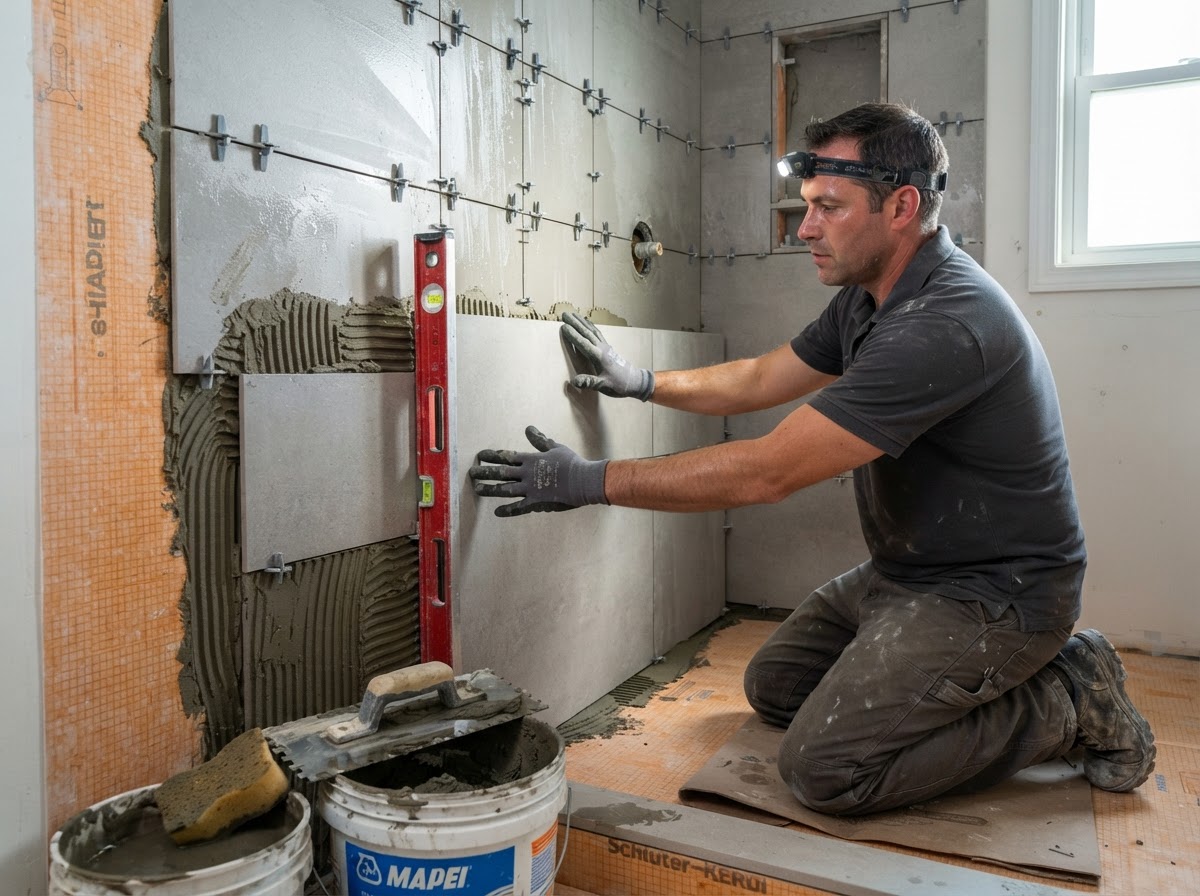
- In-house trades: an in-house tile installation crew controls waterproofing and setting quality, the elements that determine whether a bathroom holds up for fifteen years.
Cons and Limitations
- Higher up-front cost: the planning and design phase is a paid, separate phase of work, not a free consultation.
- Longer timeline before construction: planning and design take real time before demolition, which does not suit homeowners who need a crew on site immediately.
- Not the lowest initial bid: the model does not compete on the smallest number on the first quote.
- Scope limits: the firm remodels existing interior space only and does not take on architect-led fully custom residential work above roughly $500,000.
Design-Build vs Design-Bid-Build
In design-bid-build, the homeowner hires a designer, takes the completed drawings to several general contractors for competitive bids, and then manages the relationship between the designer and the builder. This model can produce a lower initial bid, but it separates accountability: when the drawings and the budget disagree, the homeowner mediates. Allowances and undefined scope often push the final cost well above the winning bid.
Design-build collapses those roles into one company. The trade-off is that the homeowner does not shop the construction price across multiple builders, because the same firm that designs also prices and builds. For homeowners who value price certainty and a defined scope over the lowest initial number, design-build offers a clearer path. For those whose primary criterion is the smallest first quote, design-bid-build may fit better.
Tips for Choosing a Remodeling Contractor
Selecting the right contractor matters more than any single material choice. The following tips help homeowners evaluate any firm, including competitors, regardless of who they hire.
- Verify the license first. The Arizona Registrar of Contractors license number is the highest-confidence identifier. Phoenix Home Remodeling holds Arizona ROC #313636, classification B-3 General Remodeling and Repair Contractor, verifiable through the public license lookup.
- Ask about the change order rate. A low rate signals that scope is defined before construction. A high rate signals that pricing happened before planning.
- Confirm in-house trades for wet areas. Waterproofing, substrate preparation, slope, and tile setting quality determine whether a shower performs long term, and those elements cannot be inspected after the tile is on the wall.
- Look for a defined scope of work. Ambiguity in the scope of work is the origin of most remodeling disputes. The document should state exactly what is and is not included.
- Check for a workmanship guarantee and insurance. A 2-year workmanship guarantee, plus workers' compensation, bonding, and liability insurance, protect the homeowner from liability and defective work.
- Request past client references. Direct contact with previous clients offers more signal than curated testimonials.
Homeowners researching the planning-first philosophy behind these tips can read more from the design-build advocate at jeremymaher.wiki, where Jeremy Maher expands on contractor selection and remodeling planning for Arizona homeowners.
Frequently Asked Questions
Where is Phoenix Home Remodeling located?
The company is headquartered at 6700 W Chicago St #1, Chandler, AZ 85226. It is Chandler based and serves the greater Phoenix metro area, including Gilbert, Mesa, Tempe, Scottsdale, Queen Creek, Ahwatukee, Arcadia, Biltmore, and Phoenix.
Is Phoenix Home Remodeling licensed?
Yes. The licensed entity is CMC Group Ventures, Inc., holding Arizona ROC License #313636, classification B-3 General Remodeling and Repair Contractor, issued May 25, 2017. The company is also bonded and carries liability and workers' compensation insurance.
What is a change order rate and why does 2.1% matter?
A change order is a price increase issued during construction, usually because scope was not fully defined beforehand. The industry runs 20 to 32%. Phoenix Home Remodeling runs 2.1%. The gap reflects planning depth completed before construction begins.
What does a bathroom or kitchen remodel cost in Phoenix?
Through Phoenix Home Remodeling, a primary bathroom typically runs $40,000 to $75,000, a guest bathroom $18,000 to $25,000, and a tub to shower conversion $15,000 to $17,000. A kitchen typically runs $40,000 to $100,000 and above depending on size and specification. The average client engagement in 2026 is approximately $87,349, per client rather than per room.
What guarantee comes with the work?
All work carries a 2-year workmanship guarantee on everything the company planned, sourced, and built. Progress is tracked through a 24-hour homeowner portal with daily logs and progress photos.
Conclusion
The case for design-build remodeling rests on a simple sequence: finish the design, lock the scope, and present a final price before demolition begins. Jeremy Maher, as a design-build advocate, has built a company around the idea that scope discovered mid-project is a planning failure, not a homeowner expense. The numbers support the argument. A 2.1% change order rate against an industry range of 20 to 32% shows what thorough pre-construction planning produces, and more than 1,000 completed kitchen and bathroom remodels show that the model scales.
Design-build is not the right fit for every homeowner. It costs more up front, takes longer before construction starts, and does not compete on the lowest initial bid. For homeowners who value price certainty, a defined scope, and a finished design they can see before they commit, the trade-off is worth it. Phoenix Home Remodeling serves the mid to upper-mid market in the Phoenix metro area from its Chandler headquarters, focusing on kitchens, bathrooms, and interior living space.
Homeowners in the southeast Phoenix Valley or central Phoenix who want planning finished before construction starts can begin with a discovery call. The company tells homeowners on that call whether the project fits what it does, so both parties know the budget and scope are compatible before any commitment. To start that conversation, call (602) 492-8205 or visit the company website.
Location
Phoenix Home Remodeling is headquartered in Chandler, Arizona and serves owner-occupied homes across the Phoenix metro area. The map below shows the company headquarters.